Laundry Services for Airbnb and Short-Term Rental Hosts: A Practical Guide
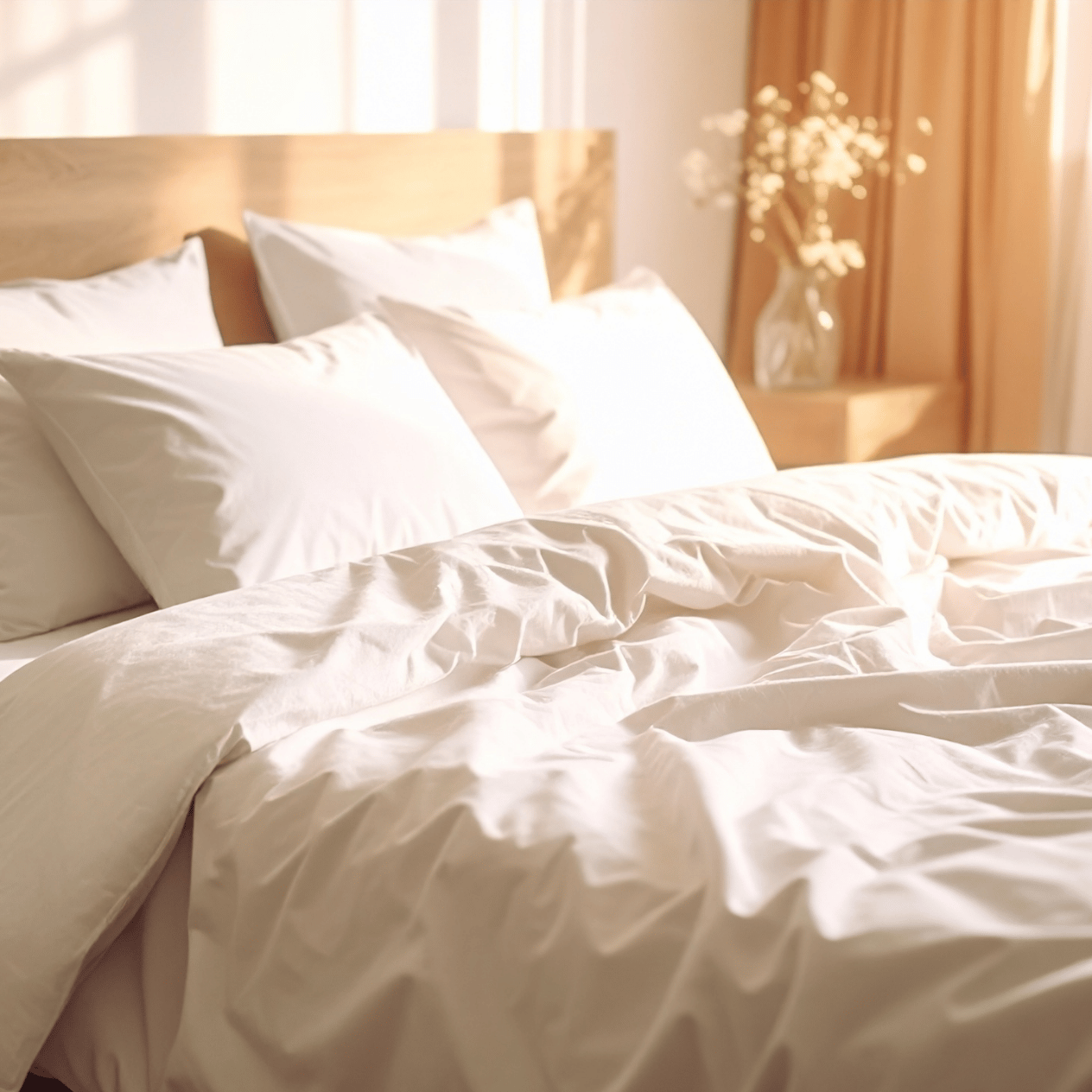
Every short-stay host learns the same lesson eventually: guests forgive a lot, but they don’t forgive grey towels or sheets that smell faintly of the last booking. Linen is one of the few things a guest touches with their whole body, and it shapes a review more than almost anything else in the property. That’s why laundry services for Airbnb and short-term rental hosts have become a normal part of running a listing rather than a luxury — particularly when back-to-back bookings leave only a few hours between checkout and check-in.
This guide covers what short-stay linen actually needs, how to build a system that survives a busy season, and when handing the washing over to a professional makes sense.
Why Linen Is the Hardest Part of a Turnover
Cleaning a bathroom takes a set amount of time. Laundry doesn’t. It’s the one job in a turnover that runs on machine cycles rather than effort, and a single domestic washer and dryer can only move so much volume. Add a stained pillowcase or a doona cover that needs re-washing and the schedule collapses.
The other issue is consistency. Guests notice variation. Sheets that are crisp one stay and creased the next read as carelessness, even when the property is spotless.
Wash and Fold or Dry Cleaning: Knowing the Difference
Most short-stay linen — sheets, pillowcases, towels, tea towels, bath mats — is standard laundry, best handled as a wash-and-fold service. It’s washed in water with detergent, dried, and folded ready to go back on the bed.
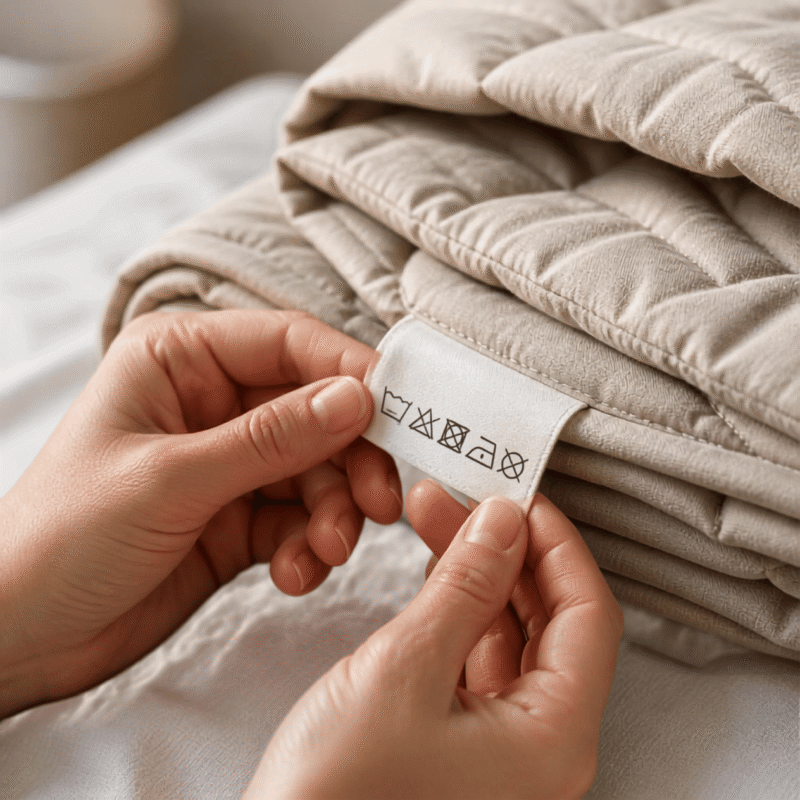
Dry cleaning is a different process using solvent rather than water, and it’s reserved for items that water would damage: some quilts and doonas, decorative cushion covers, certain curtains, and wool or silk throws. Care labels tell you which category an item falls
into, and they’re worth checking before an expensive throw goes through a hot wash. Master Dry Cleaners handles both, which matters when a property’s linen cupboard contains a mix of the two.
Build a Par Level Before You Need One
The single most useful thing a host can do is stop working from one set of linen per bed.
How many sets you need
Three sets per bed is a common working standard: one on the bed, one clean in the cupboard, one in the wash. With back-to-back bookings, four gives you breathing room. The same logic applies to towels, and towels wear out faster.
Retire linen on a schedule
Sheets and towels have a life. Once towels stop feeling absorbent, or sheets thin at the fold lines, they’re past the point where cleaning fixes them. Rotating stock out deliberately is cheaper than a review that mentions scratchy towels.
Handling the Stains Short-Stay Properties Actually Get
Makeup on pillowcases, fake tan on sheets, red wine, sunscreen, and the occasional shoe polish mark are the regulars.
Treat them cold and treat them early. Hot water sets protein and tannin stains, so a stained item should never go straight into a hot cycle or a dryer — heat locks the mark in permanently. Blot rather than rub, and separate stained pieces so they don’t hold up the rest of the load.
Never combine cleaning products in an attempt to shift a stubborn mark. Mixing bleach with vinegar, ammonia or other cleaners produces genuinely dangerous fumes, and it rarely improves the result. Professional cleaning gives many stains a much better chance, but no cleaner — domestic or commercial — can promise that every mark will come out.
Keeping Whites White and Towels Absorbent
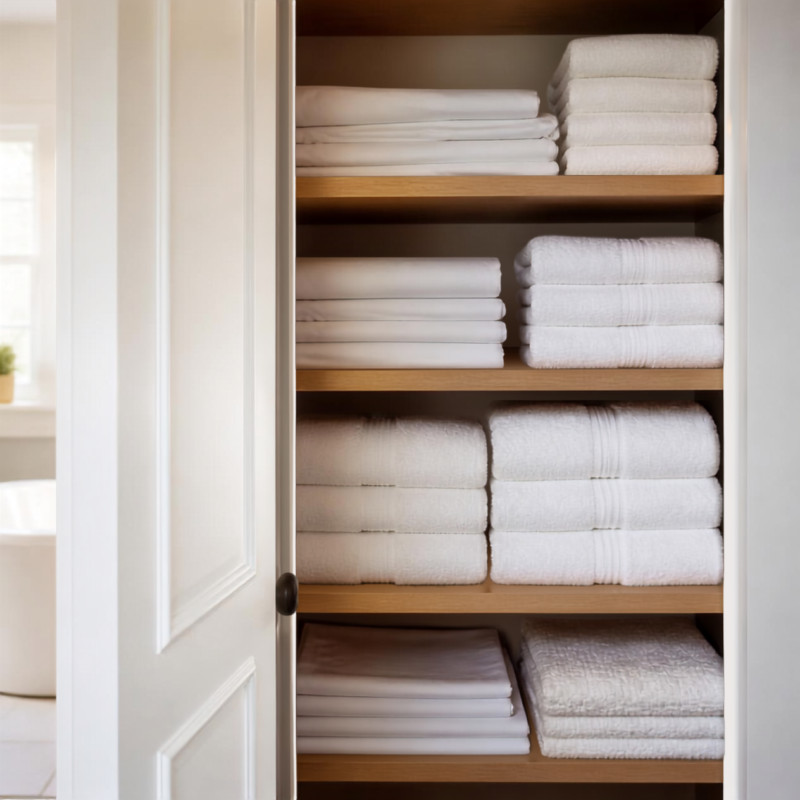
Grey, tired whites usually come from overloading and under-rinsing rather than from a lack of bleach. Washing machines need room for water to move through the fabric.
Towels have the opposite problem: fabric softener coats the fibres and gradually kills absorbency. Skip it on towels entirely. Wash them separately from sheets where you can, since they shed lint that clings to smooth cotton.
Odours That Come Back Later
A musty smell that appears once a guest uses a towel usually means the item was left damp — in the machine, in a basket, or in a stack that hadn’t finished drying. Short-stay laundry is especially prone to this because turnovers are rushed. Everything needs to be fully dry before it’s folded and put away, and linen cupboards need air movement.
When Outsourcing Makes Sense
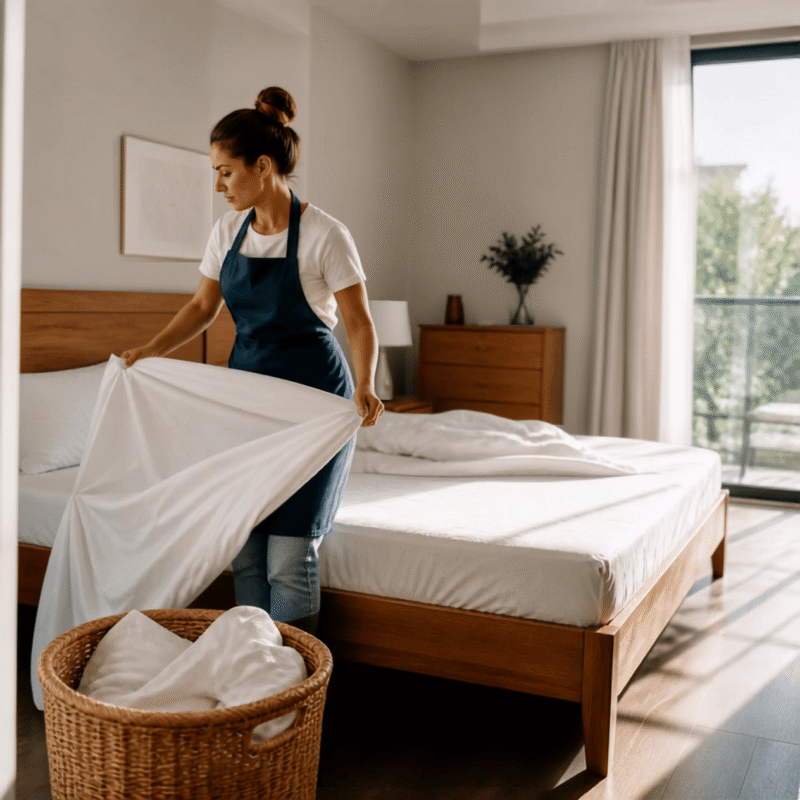
Outsourcing is worth considering when you’re managing more than one property, when you regularly have same-day turnovers, when your cleaner’s time is better spent on the property itself, or when you simply want the linen to look the same every single stay. A commercial laundry has capacity a domestic machine doesn’t, and it takes the most time-sensitive job in the turnover off your critical path.
Frequently Asked Questions
Should I wash linen between every guest?
Yes — all bed linen and towels, every stay, without exception. Quilts, mattress protectors and pillow protectors are cleaned on a rotating schedule and immediately if soiled.
Do doonas and quilts need dry cleaning?
It depends on the filling and construction. Check the care label; some are washable, others are not and getting it wrong can ruin the loft permanently.
Can I mix guest towels and sheets in one load?
It’s better not to. Towels shed lint and take longer to dry p
roperly, which risks leaving sheets damp.
How do I stop linen smelling stale in storage?
Make sure it’s completely dry before folding, and store it somewhere ventilated rather than sealed in plastic.
Get Your Turnovers Back Under Control
If linen is the bottleneck in your turnover, it doesn’t have to be. Talk to Master Dry Cleaners about wash-and-fold laundry and dry cleaning for your short-term rental, and get your linen handled properly while you look after the rest of the guest experience.